DMP-K7 and MUPURE: A Private Music Library Across Local, NAS and Cloud Storage

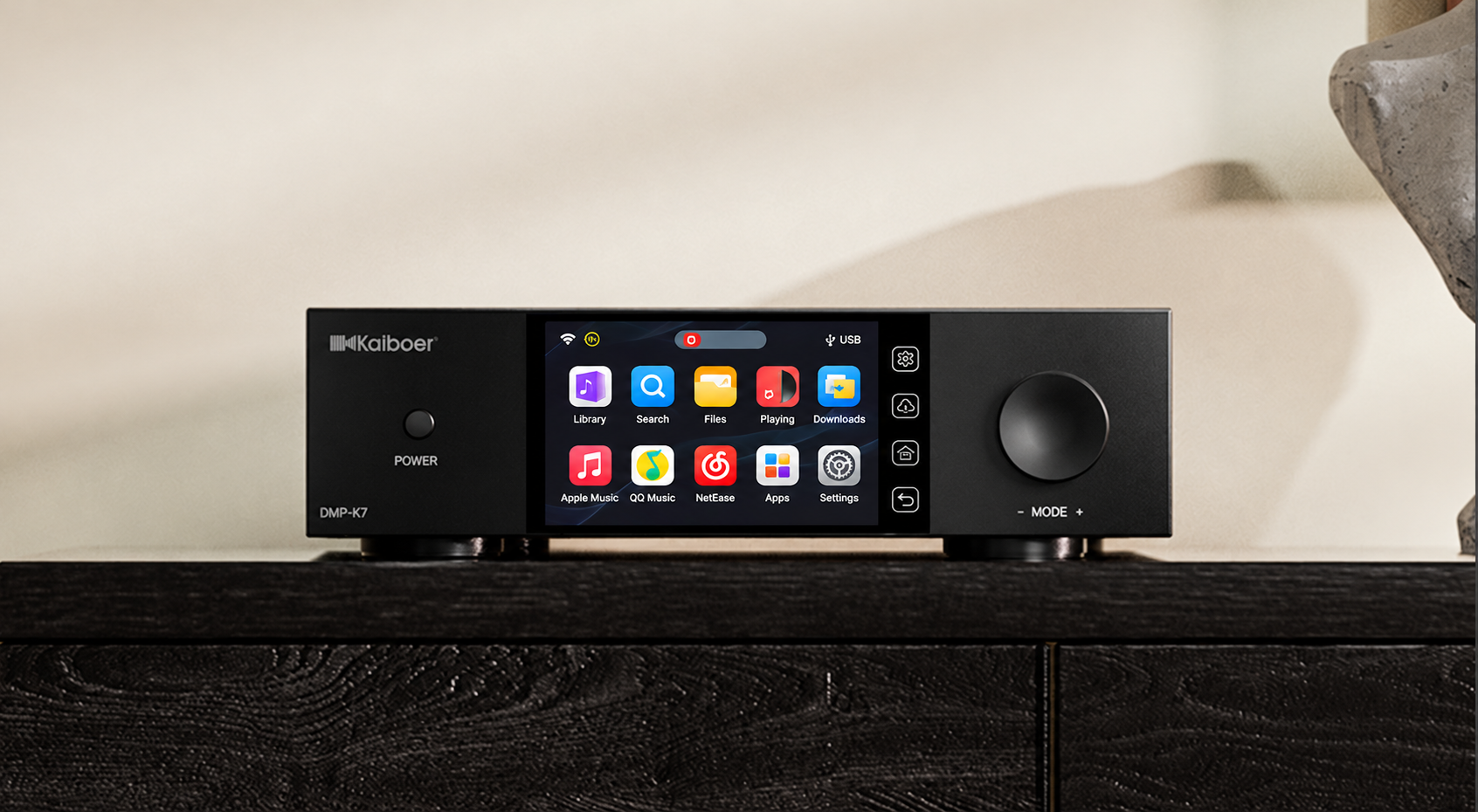
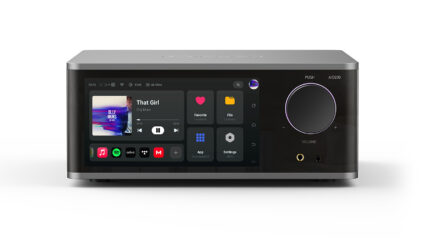
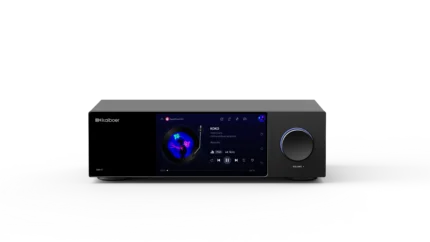
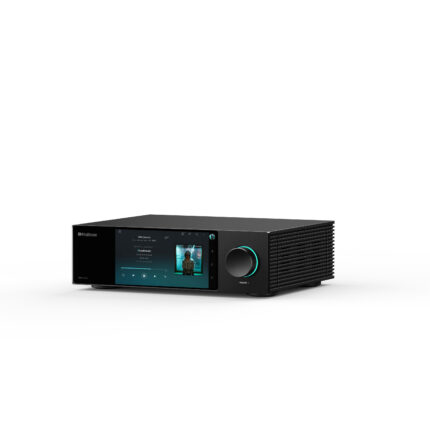
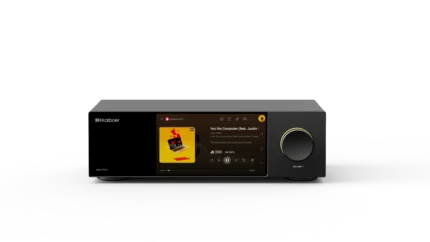
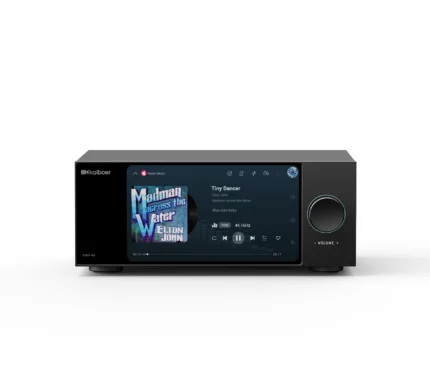
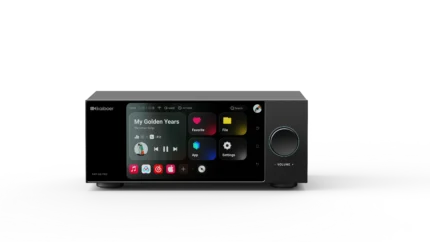
Many KAIBOER listeners know the poster-wall approach from the company’s UHD media players. The DMP-K7 brings a related idea into music: MUPURE organizes a personal collection into an album wall, with browsing and search across supported storage sources.
The original Chinese feature looks at a collection that has grown across several drives, including DSD recordings, vinyl transfers and individual tracks. Its focus is bringing those files back into one manageable music library.
Scan the collection and build an album wall
When a supported new drive is recognized, MUPURE can offer to scan it. The player groups the available music and displays embedded album information and artwork where present.
For files without embedded artwork, the feature describes an online cover-matching option. Available services can also supply album and artist information. The resulting album wall can be arranged as a grid, turning folders of music into a collection that is easier to browse on the player’s screen.
Flexible search and related results
Users can search for an album, artist or track without entering an exact title. The source describes approximate matching and related recommendations based on the search, helping listeners find familiar music and explore similar material in the collection.
The MUPURE mobile companion app provides another control point, letting the listener browse and operate the player from a phone rather than standing at the front panel.
Four routes into the same library
For the DMP-K7, the original feature describes four storage routes. The internal M.2 slot supports an NVMe SSD up to 8 TB. USB 3.0 supports external storage, with a 20 TB drive used in the example reported by the article.
Gigabit Ethernet and Wi-Fi 6 provide access to a compatible NAS. Supported cloud applications provide direct playback from stored music through an internet connection, avoiding the need to manually copy every album to a local drive before choosing it.
Cloud playback still transfers audio data over the network. Availability and performance depend on the app, service and connection. The source presents the four routes as a way to organize collections that remain physically separate.
High-resolution formats and track access
The original platform feature lists support for DSD up to DSD1024, with formats including DSF, DFF and supported DSD ISO variants. PCM formats include WAV, FLAC, AIFF, ALAC, MP3 and APE, with playback routes listed up to 32-bit/1536 kHz. It also describes MQA passthrough and CUE handling.
Those maximum figures describe supported playback paths rather than every output or receiving DAC. The chosen connection must support the intended format.
For large album files, the feature discusses CUE-guided track access and DSD ISO handling, allowing the collection to be navigated at track level while retaining the original audio data through the supported operation.
Keep playlists with the collection
Playlists can be exported as backup files in the workflow described by the source. This gives the listener a way to retain the organization created over time when reinstalling the system or moving to another compatible device.
The article’s aim is to reduce the administrative work of a growing collection. MUPURE brings storage access, artwork, search and saved playlists together so that owning more music also means being able to find and enjoy it.
English adaptation of the original KAIBOER Chinese news article. Source publication date: 2026-04-14. Cover adapted from KAIBOER product artwork for the English edition; illustrative interface details may differ.