Kaiboer K-Class Amplifier Nears Production in 2026

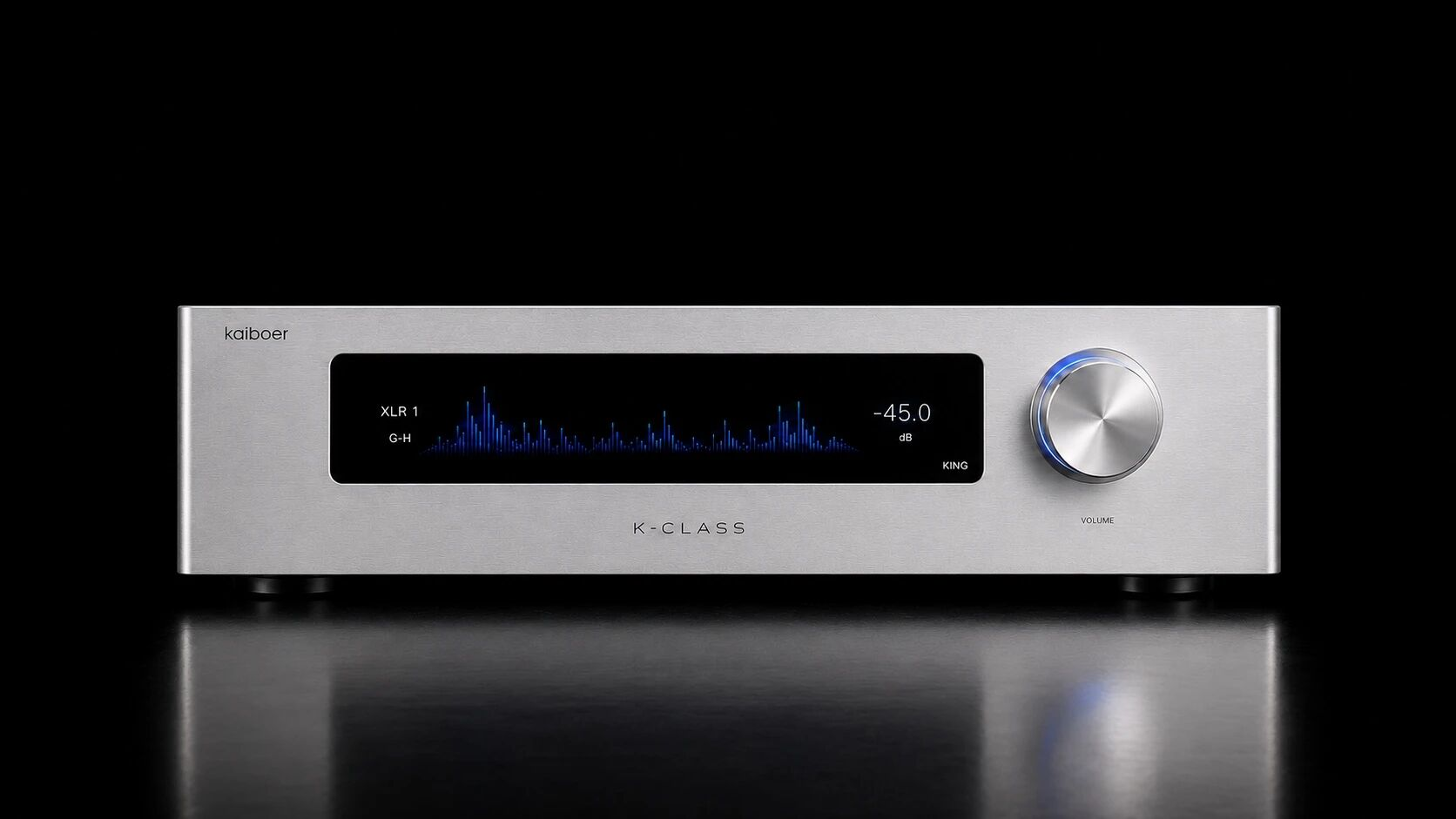
Hello, fellow audio enthusiasts. Today we have an important official announcement: development of Kaiboer’s new “K-Class (King-Class) Smart Digital Amplifier” has entered its final stage. The laboratory engineering prototype has passed all current tests, and mass production and market launch are expected in the second half of 2026.
For decades, amplifier design has largely operated within a familiar framework: Class A offers a warm sound but consumes a great deal of power; Class B improves efficiency but often sacrifices some listening finesse; and mainstream Class D delivers excellent efficiency but is often associated with a “digital” sound. Kaiboer’s K-Class amplifier moves beyond the conventional Class A/B/D framework. It uses gallium nitride semiconductors and proprietary algorithms to build a new approach to power amplification.
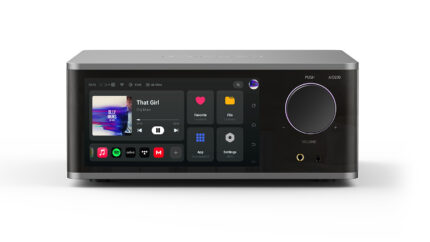
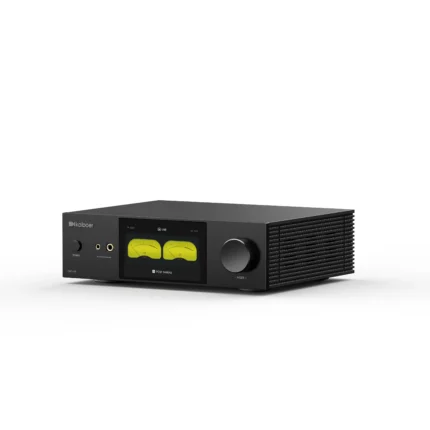
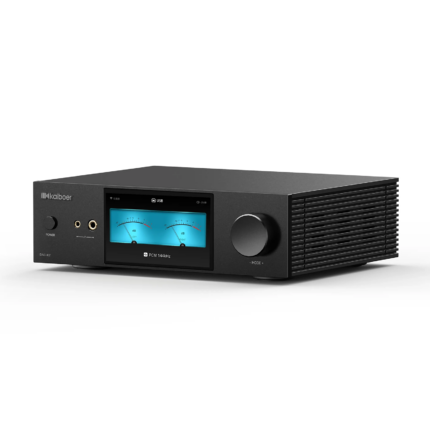
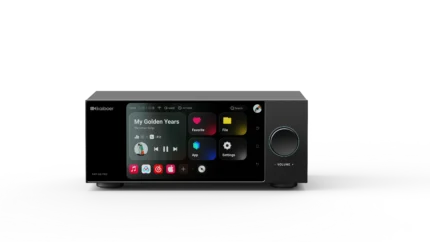
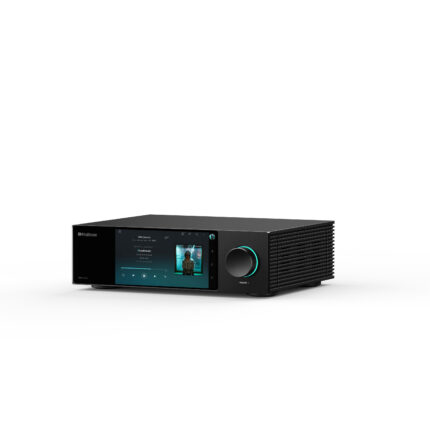
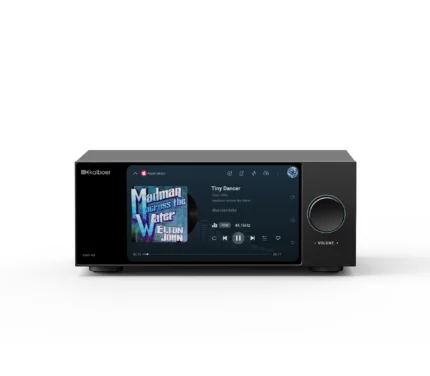
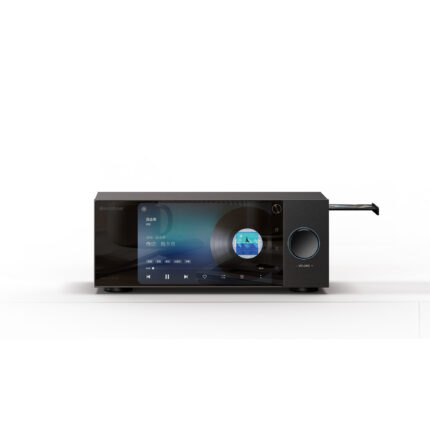
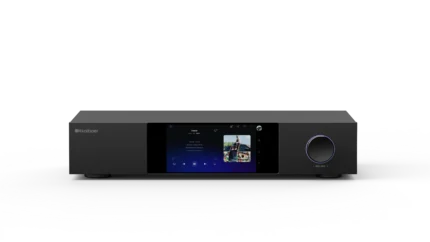
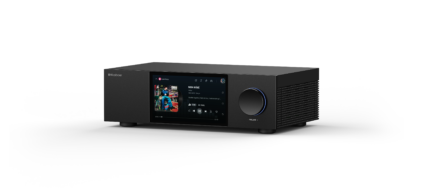
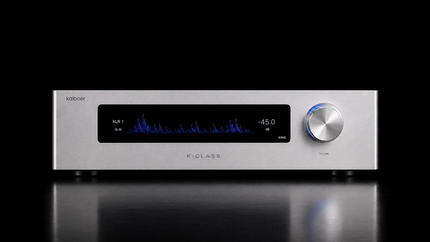
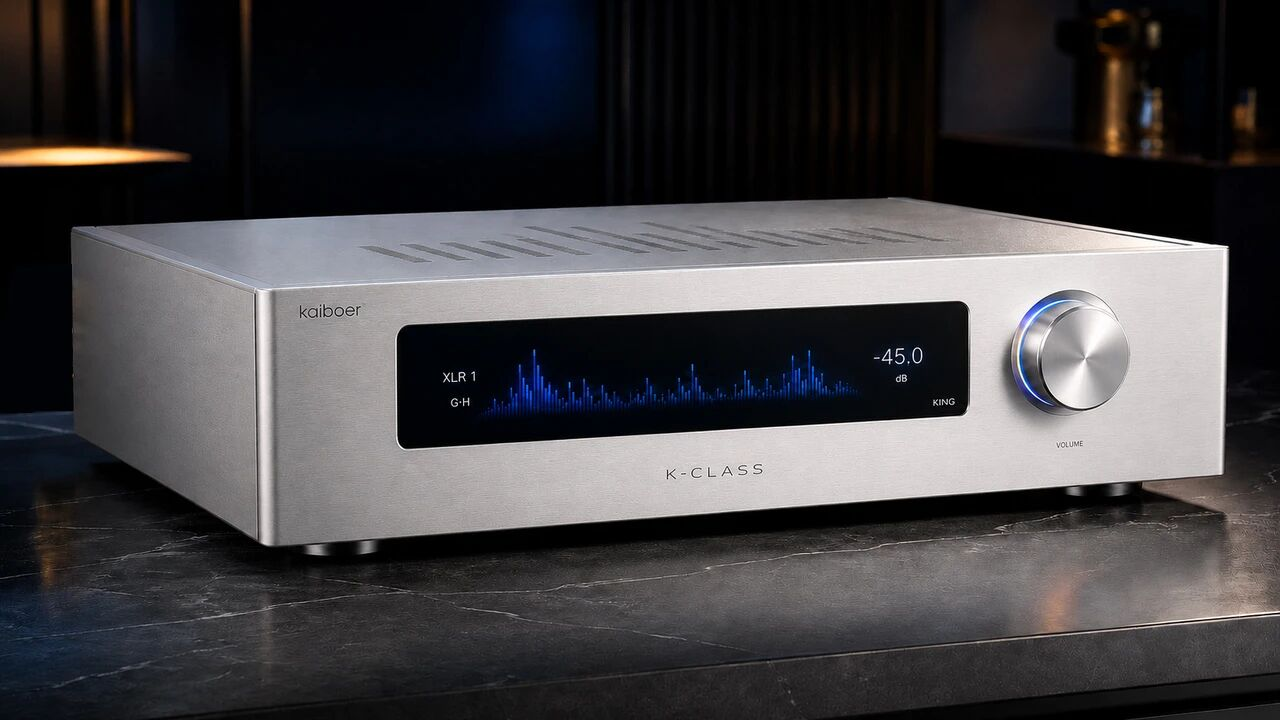
Rendering of Kaiboer’s first “K-CLASS” concept model. The final production appearance has yet to be determined. Laboratory code name: K.
Years of Preparation Behind a New Amplifier Concept
Some enthusiasts may wonder why Kaiboer is announcing such an unconventional concept product now. This innovation is built on years of accumulated audio technology:
1. Experience from an established amplifier lineup
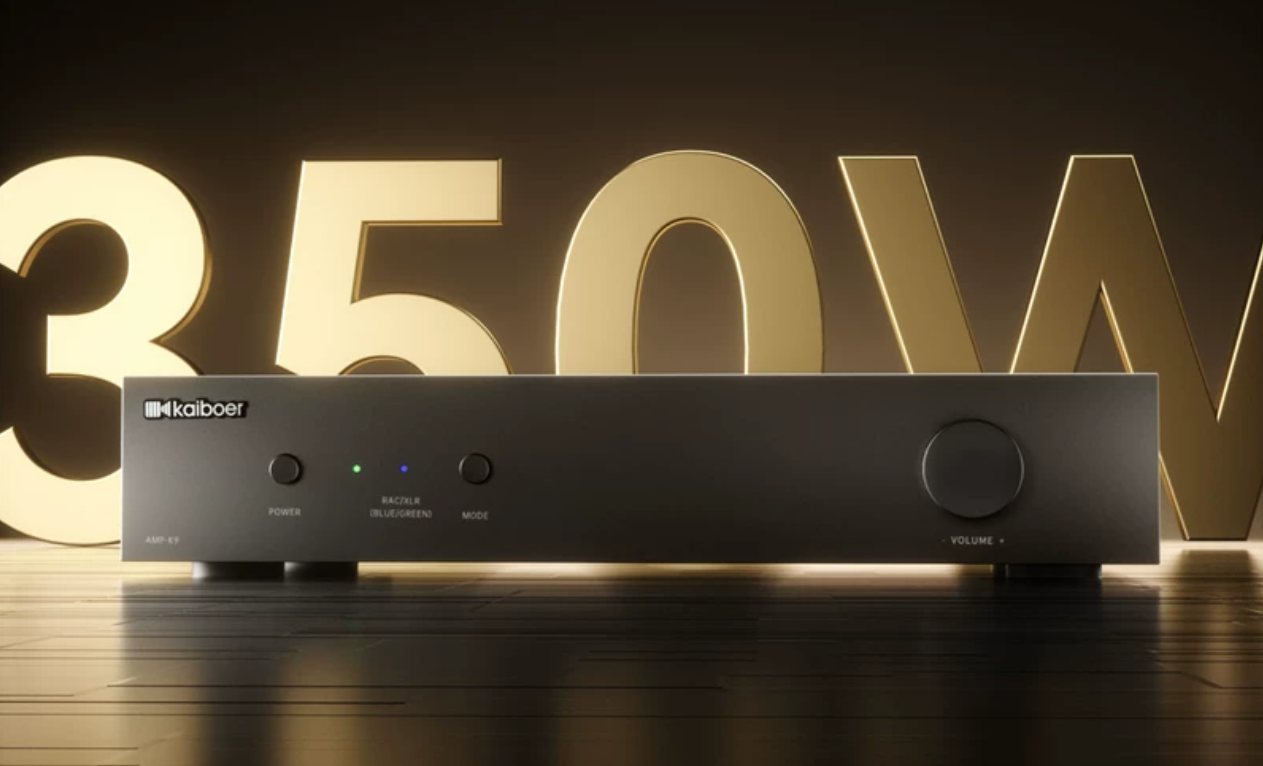
From the popular entry-level AMP-K7 to the higher-end AMP-K9, both models have earned recognition from audio enthusiasts in China and overseas. Their development has generated extensive acoustic and circuit data covering high-power output, speaker matching, and clean amplification, forming a comprehensive amplifier R&D database.
2. A foundation in an in-house Hi-Fi ecosystem
Kaiboer has complete in-house hardware and software R&D teams and its own manufacturing facility. Together with close strategic partnerships with leading component suppliers worldwide, this gives the company control over the process from chips, PCBs, and power supplies to the finished chassis—and the ability to bring a new product architecture into production.
Looking across today’s Hi-Fi industry, streamers and DACs have gone through several rounds of technological development. New technologies such as GaN, high-speed digital processing, and intelligent interaction are becoming widespread. Amplifier design, however, has remained relatively unchanged, leaving considerable room for new underlying technologies. Kaiboer has chosen to enter this field with its self-developed K-Class architecture and bring music lovers something new.
K-Class (King-Class) stands for a “Kinetic-Energy Intelligent Algorithm Amplifier.” It is designed to move beyond the physical limitations of purely hardware-based analog amplification or simple digital amplification by closely combining the power capabilities of gallium nitride (GaN) semiconductors with microsecond-level intelligent algorithms running on an FPGA and dual-core MCU.
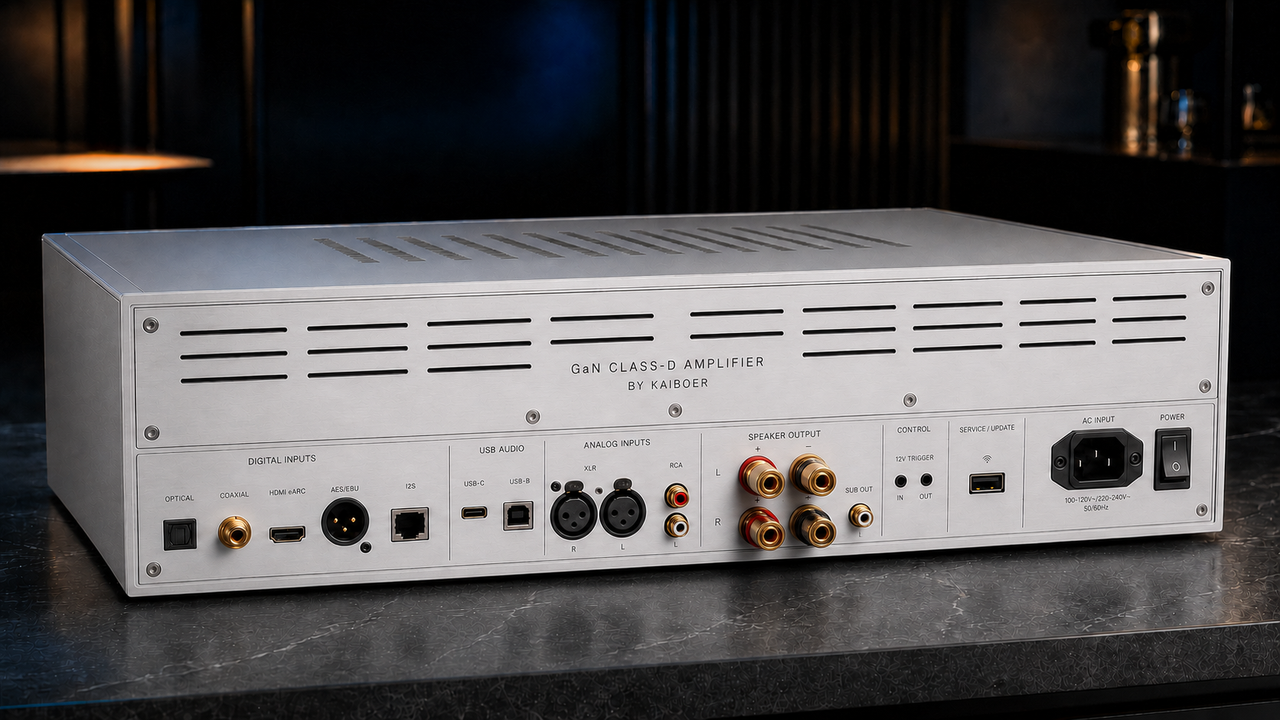
A conventional amplifier simply amplifies a signal. Through an FPGA core and high-precision ADC, the K-Class amplifier performs real-time intelligent adjustment and power restructuring of the audio signal. The goal is to combine the smooth listening experience and refined tone associated with traditional Class A amplification with the striking transient response and energy-conversion efficiency of Class D.
GaN Direct-Drive Power: Strong Output from a Compact Chassis Without a Cold Digital
Traditional amplifiers are limited by the physical characteristics of silicon-based transistors, which can lead to high-frequency harshness and soft bass. K-Class uses Kaiboer’s GaN high-frequency drive solution. The digital signal enters the K-Class module directly, without digital-to-analog conversion through a DAC chip, and drives the GaN amplifier transistors for output.
Within K’s standard 430 × 256 × 120 mm chassis, each channel can deliver 200 W into 4 ohms. A dedicated subwoofer output is also included. The resulting sound is intended to be fast, precise, and stable, with the powerful, controlled bass that enthusiasts value—moving away from the cold, hard “digital” sound.
Physically Separated Circuits and FPGA-Controlled Inputs for a Cleaner Signal
In some conventional all-in-one amplifiers, high- and low-voltage circuits sit close together, creating a risk of internal interference. Switching between inputs can also produce slight noise. K uses a physically separated design for its amplifier power board and decoding I²S interface board, keeping the high-power supply apart from sensitive audio signals to reduce interference at the hardware level.
To meet the needs of demanding listeners, the confirmed connection options include Qualcomm QCC3095 Bluetooth, HDMI eARC, USB, optical, coaxial, AES, I²S, balanced XLR, and RCA. An FPGA coordinates all input signals with microsecond-level switching. Together with an XMOS XU316 audio interface and STM32H747 high-speed dual-core microcontroller, the system is designed to switch sources with virtually no signal loss and maintain clean transmission.

Dual FemtosecondClocks Reduce Jitter and Restore Musical Detail
Even with a high-end audio system, listeners may find that some sonic details—particularly high-frequency overtones—are missing. Insufficient clock precision and audio-signal jitter are often contributing factors.
Rather than using a conventional clock, K-Class is equipped with two independent femtosecond clock oscillators at 45.1584 MHz and 49.1520 MHz, matched respectively to the two main audio families based on 44.1 kHz and 48 kHz. By substantially reducing signal jitter, the design aims to reproduce instrumental overtones, the breath in vocals, and the sense of space more completely, creating a transparent, three-dimensional listening experience.
A 9.16-Inch Smart Display Brings Visual Interaction to the Amplifier
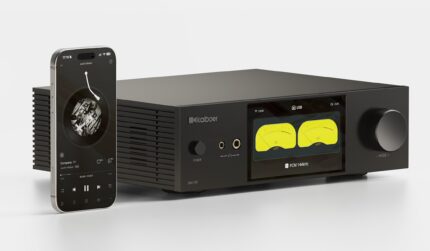
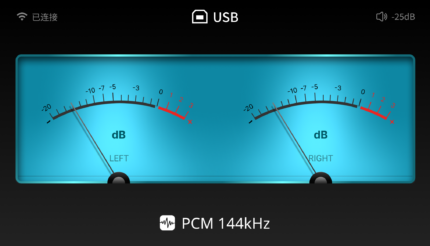
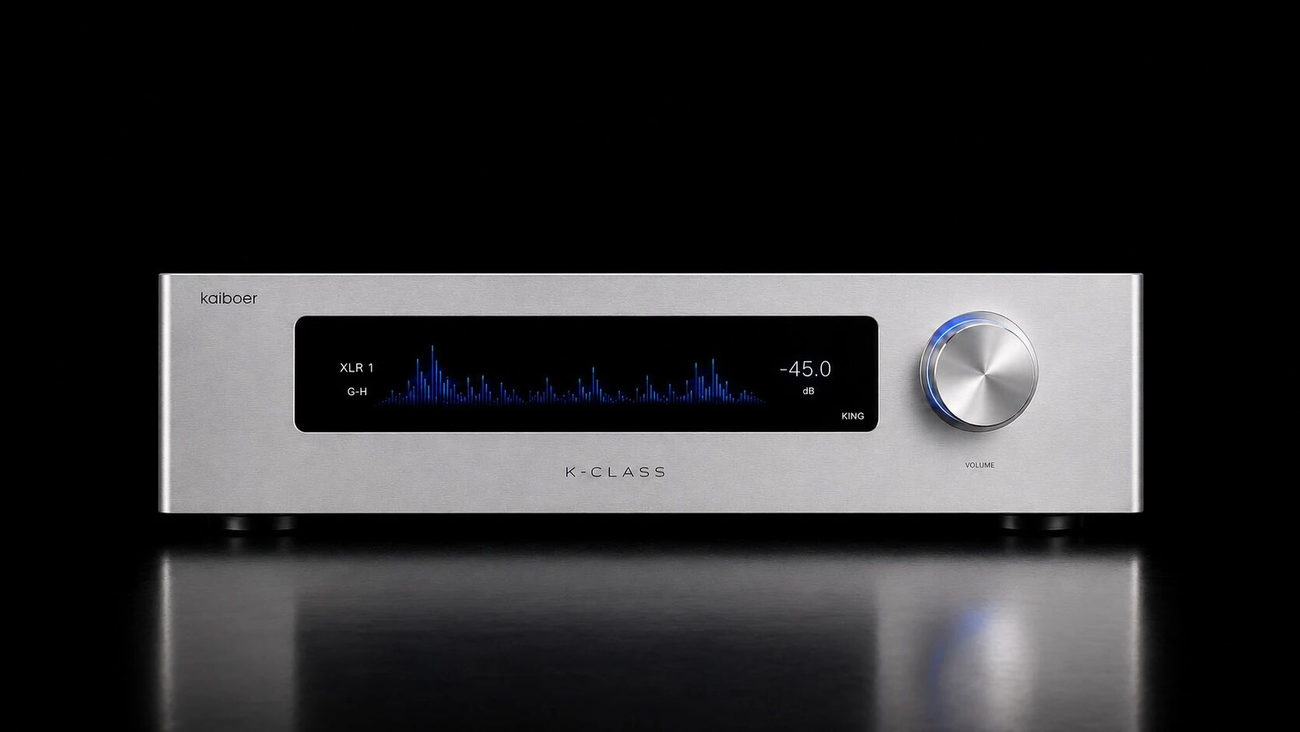
Traditional amplifiers generally offer only simple indicator lights or small numeric displays, making interaction feel limited. K features a 9.16-inch elongated smart display on the front panel, with a resolution of 462 × 1920. It displays spectrum waveforms, volume, input channels, and device information in real time.
A metal volume knob with RGB lighting and a full-featured Bluetooth remote add to an interface that is designed to feel professional, attractive, and even a little futuristic. The chassis also includes a reserved USB update port and a 12 V trigger connection. Together with the HDMI eARC function mentioned above, these features allow intelligent integration with a complete audio and video system. Future firmware updates can continue to expand and improve its functions.
K-Class is more than a new amplifier. It represents a new amplifier design standard developed by Kaiboer’s audio laboratory: the King-Class Kinetic-Energy Intelligent Algorithm Amplifier, which may become an important form of amplification in the future.
The K-Class amplifier in the K concept model has completed stages of whole-unit stability testing, long-term aging tests, and compatibility tests with multiple speakers. It is scheduled to enter mass production in the second half of the year.
We will continue to share detailed internal views, hands-on listening tests, and explanations of itsspecifications. Audio enthusiasts are welcome to follow Kaiboer’s official channels or join the discussion and share suggestions on the Kaiboer forum.